%20(2).png)
Winter Solstice: Why Today Is the Shortest Day of the Year
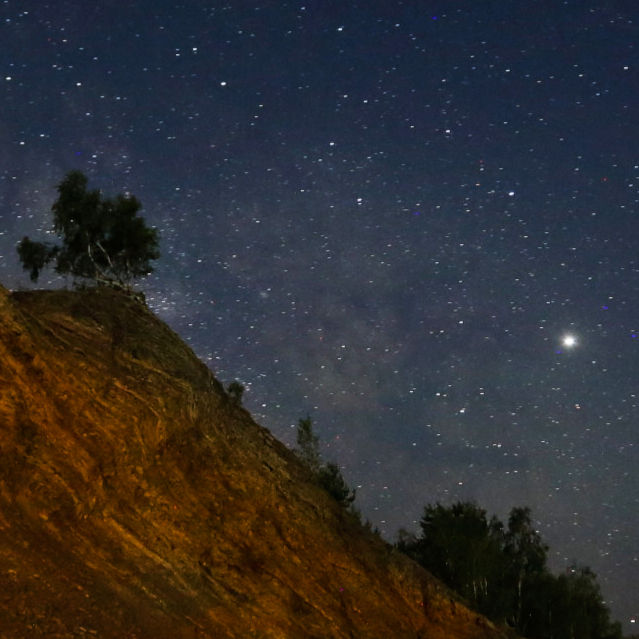
Today, December 21, 2025, at exactly 10:03 AM EST, something astronomical happened. The Northern Hemisphere reached its maximum tilt away from the Sun, marking the winter solstice, the shortest day and longest night of the year.+
If you're in the Northern Hemisphere, you got somewhere between 8 and 11 hours of daylight today depending on your latitude. The Sun rose late, set early, and traced its lowest arc across the sky all year. And starting tomorrow, the days begin getting longer again, slowly at first, but steadily marching toward spring.
The winter solstice is one of those moments that ancient cultures marked with massive stone monuments, modern cultures celebrate with festivals and holidays, and most people today barely notice because we're too busy shopping for Christmas gifts. But it's actually one of the most significant astronomical events of the year, and understanding why it happens reveals something fundamental about how our planet works.
The 23.5-Degree Tilt That Changes Everything
The winter solstice happens because Earth doesn't orbit the Sun standing straight up. Our planet is tilted on its axis by 23.5 degrees, like a spinning top that's leaning slightly to one side.
This tilt is the reason we have seasons. If Earth's axis were perpendicular to its orbit around the Sun, every place on the planet would get the same amount of daylight every single day of the year. There would be no winter, no summer, no spring, no fall. Just one endless season.
But that 23.5-degree tilt means that as Earth orbits the Sun, different parts of the planet get more or less direct sunlight at different times of year. When the Northern Hemisphere is tilted toward the Sun (around June 21), we get summer. When it's tilted away from the Sun (around December 21), we get winter.
During the winter solstice, the North Pole is leaning as far away from the Sun as it physically gets during the year. The Sun's rays hit the Northern Hemisphere at their most oblique angle, spreading that light over a larger surface area and reducing both intensity and warmth.
At the exact moment of the solstice, the Sun is directly overhead at the Tropic of Capricorn (23.5 degrees south latitude). It's the southernmost point the Sun reaches in the sky during its annual journey. After this moment, it starts moving north again, bringing longer days back to the Northern Hemisphere.
Why "Solstice" Means "Sun Stands Still"
The word "solstice" comes from Latin: "sol" (sun) and "stitium" (to stand still). Ancient observers noticed that as winter approached, the Sun's path across the sky got lower and lower each day. Then, around December 21, it seemed to pause. For a few days, the Sun rose and set at almost the same spots on the horizon, appearing to "stand still" before reversing direction and climbing higher in the sky again.
Of course, the Sun isn't actually moving. It's Earth's tilted axis and our orbital position that create this apparent pause. But to people watching the sky without modern astronomy, it genuinely looked like the Sun had stopped its southward journey and was preparing to return north.
This reversal was hugely significant to ancient cultures. It meant the darkest days were behind them. The Sun was "reborn," and spring would eventually return. Many winter holidays and festivals are rooted in this astronomical turning point.
The Shortest Day (But Not the Latest Sunrise)
Here's something weird: December 21 is the shortest day of the year, meaning it has the fewest hours between sunrise and sunset. But it's not the day with the latest sunrise or the earliest sunset.
In most locations in the Northern Hemisphere, the earliest sunset actually happens in early December, about two weeks before the solstice. The latest sunrise happens in early January, about two weeks after the solstice.
Why? It has to do with Earth's elliptical orbit and the equation of time, which describes how solar noon (when the Sun is highest in the sky) drifts slightly throughout the year. The solar day isn't exactly 24 hours every single day. These tiny variations add up, causing sunrise and sunset times to shift independently of day length.
So while December 21 has the shortest total daylight, the sun sets earliest in early December and rises latest in early January. The solstice is when the combination of late sunrise and early sunset produces the minimum total daylight.
How Much Daylight You Get Depends on Latitude
The further north you live, the more dramatic the winter solstice becomes.
At the equator, day and night are roughly equal year-round. Even on the solstice, you get about 12 hours of daylight.
In Washington DC (around 39°N), today brought about 9 hours and 26 minutes of daylight.
In New York City (about 41°N), it's about 9 hours and 15 minutes.
In Seattle (about 47°N), only about 8 hours and 25 minutes.
In Fairbanks, Alaska (about 65°N), the Sun barely rises above the horizon, giving less than 4 hours of twilight before setting again.
And at the Arctic Circle (66.5°N) and beyond, the Sun doesn't rise at all on the solstice. These regions experience polar night, where the Sun stays below the horizon for days, weeks, or even months depending on how far north you go.
Meanwhile, in the Southern Hemisphere, it's the opposite. Today is their summer solstice, the longest day of the year. In Antarctica, the Sun doesn't set. In Sydney, Australia, they're getting about 14 hours and 24 minutes of daylight, enjoying long summer evenings while we're bundling up in the dark.
Why It's Not the Coldest Day
You'd think the shortest day would also be the coldest, right? Less sunlight equals colder temperatures. But that's not how it works.
The coldest days of winter in the Northern Hemisphere typically come in late January or early February, more than a month after the solstice. This delay is called seasonal lag, and it happens because land and water take time to heat up and cool down.
Think of it like a pot of water on a stove. When you turn off the heat, the water doesn't cool down instantly. It holds onto that thermal energy for a while before gradually releasing it. Earth's oceans and land masses work the same way.
During fall and early winter, Earth is still releasing heat it stored during the summer. Even though the days are getting shorter and solar input is decreasing, there's still a lot of stored warmth being released. It takes weeks for that heat bank to deplete to the point where temperatures drop to their winter lows.
By the time we hit late January, the days are actually getting noticeably longer again. But Earth has finally radiated away most of its stored summer heat, so that's when we experience the coldest weather. The seasons lag behind the astronomy by about 6-8 weeks.
Ancient Monuments Aligned to the Solstice
The winter solstice wasn't just noticed by ancient people. It was so significant that they built massive stone structures specifically to mark it.
Stonehenge in England is perhaps the most famous. The monument's great trilithon, Heel Stone, and avenue are aligned with the winter solstice sunset. On December 21, the Sun sets directly in line with these massive stones, creating a dramatic spectacle that thousands of people still gather to witness today.
Newgrange in Ireland, built around 3200 BCE (older than Stonehenge and the Egyptian pyramids), has an even more impressive feature. The monument includes a "roof box," a special opening above the entrance. On the morning of the winter solstice, and only on that morning, sunlight shines through this opening, travels down a 60-foot passage, and illuminates the inner chamber for about 17 minutes. The engineering required to achieve this precision 5,000 years ago is staggering.
Cahokia Woodhenge in Illinois, constructed by Native Americans around 1000 CE, was a circle of wooden posts that aligned with both solstices and equinoxes, functioning as an astronomical calendar.
Dozens of other ancient sites worldwide, from Egyptian temples to Mayan pyramids to structures across Europe and Asia, are aligned with solstice sunrises or sunsets. These weren't random choices. The solstices were critical for tracking the agricultural year, predicting seasonal changes, and organizing religious ceremonies.
Cultural Celebrations Across the World
The winter solstice has been celebrated for thousands of years in cultures around the globe, often as festivals of light, rebirth, and renewal.
Yule, celebrated by ancient Germanic peoples and modern Pagans, marks the rebirth of the Sun. The tradition of the Yule log, burning through the longest night to symbolically help the Sun return, dates back centuries.
Saturnalia in ancient Rome was a week-long festival around the solstice featuring feasting, gift-giving, and a temporary reversal of social norms.
Dongzhi Festival in China and East Asia celebrates the return of longer days with family gatherings and traditional foods like tangyuan (rice balls).
Inti Raymi in Incan culture (though celebrated at the June solstice in the Southern Hemisphere) honored the Sun god with ceremonies and offerings.
Many modern holidays fall near the winter solstice not coincidentally but because that timing has always been significant. Christmas, Hanukkah, Kwanzaa, and others all occur during this darkest time of year, bringing light, warmth, and celebration when nature provides the least daylight.
What Happens Next: The Return of the Light
Starting tomorrow, December 22, the days begin getting longer. At first, the change is barely noticeable, just a minute or two per day. But as we move through January and into February, the lengthening accelerates.
By the spring equinox on March 20, 2026, we'll have equal day and night again. By the summer solstice on June 21, 2026, the Northern Hemisphere will enjoy its longest day of the year.
The Sun's apparent path across the sky will climb higher. Sunrises will come earlier. Sunsets will arrive later. The angle of sunlight hitting the Northern Hemisphere will become more direct, delivering more energy per square meter and warming the land and oceans.
This is the cycle that's repeated for billions of years, driven by Earth's unchanging 23.5-degree axial tilt and our reliable orbit around the Sun. It's why ancient people celebrated the solstice as a promise: no matter how dark and cold winter becomes, the light always returns.
Look Up Tonight
If you have clear skies tonight, take a moment to look up. The winter solstice sky offers some beautiful viewing.
Jupiter is currently at opposition, meaning it's opposite the Sun in our sky and therefore visible all night. You'll find it shining brilliantly in the southeastern sky shortly after sunset. It's one of the brightest objects in the night sky right now.
Orion, the winter constellation, is impossible to miss. Look for the three stars of Orion's Belt in the southeastern sky. Below the belt is Orion's Sword, where the Orion Nebula (a stellar nursery where new stars are forming) is visible even to the naked eye as a fuzzy patch.
Sirius, the brightest star in the night sky, rises below Orion as the evening progresses. It's part of the constellation Canis Major (the Great Dog).
And if you're lucky and live in northern latitudes, solar activity could bring auroras. The Sun is currently near its solar maximum in the 11-year solar cycle, increasing the chances of seeing the northern lights even at lower latitudes than usual.
The Bottom Line
The winter solstice is Earth's annual reminder that darkness has a peak and a limit. It's the moment when the Northern Hemisphere is tilted farthest from the Sun, creating the shortest day and longest night of the year. But it's also the turning point, the moment when the slow return of daylight begins.
This astronomical event has shaped human culture for thousands of years. It's why we have ancient stone monuments aligned with incredible precision. It's why winter festivals and holidays celebrate light during the darkest time of year. It's why people gather at places like Stonehenge and Newgrange to watch the solstice sunrise or sunset, connecting with a tradition that stretches back millennia.
Modern life makes it easy to ignore the solstice. We have electric lights that banish darkness, heating systems that make winter survivable, and calendars that tell us what day it is without needing to observe the Sun's position. But the solstice still matters. It's a reminder that we live on a planet tilted in space, orbiting a star, subject to cosmic rhythms that continue whether we pay attention or not.
So today, on the shortest day of the year, take a moment to appreciate what's happening. The darkness peaks tonight. And tomorrow, imperceptibly at first, the light begins its return. Spring is coming. It always does.
Sources
NASA. Sky Tellers - Seasons. Retrieved from https://www.lpi.usra.edu/education/skytellers/seasons/
Britannica. Winter solstice. Retrieved from https://www.britannica.com/science/winter-solstice
Time and Date. December Solstice: the Shortest (and Longest) Day. Retrieved from https://www.timeanddate.com/calendar/december-solstice.html
PBS NewsHour. (2025). Winter solstice is nearly upon the Northern Hemisphere. Here's what to know about the shortest day of the year. Retrieved from https://www.pbs.org/newshour/science/winter-solstice-is-nearly-upon-the-northern-hemisphere-heres-what-to-know-about-the-shortest-day-of-the-year
Wikipedia. Winter solstice. Retrieved from https://en.wikipedia.org/wiki/Winter_solstice
stupidDOPE. (2025). Winter Solstice 2025 Is Today: Why Dec. 21 Is the Shortest Day of the Year. Retrieved from https://stupiddope.com/2025/12/winter-solstice-2025-is-today-why-dec-21-is-the-shortest-day-of-the-year/


Comments