%20(2).png)
Data Centers: The Invisible Warehouses Powering Everything
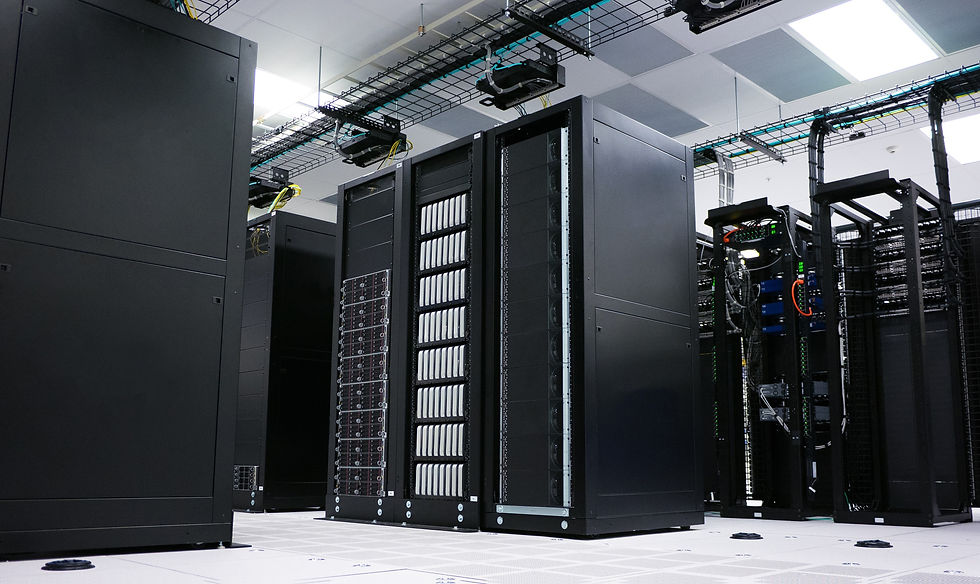
Right now, as you're reading this, data is about you flowing through data centers. Your location, your browsing history, your stored files, your social media, your photos. Every app on your phone. Every website you visit. Every AI model you interact with.
Data centers are massive warehouses filled with thousands of servers - essentially specialized computers designed to process, store, and transmit data 24 hours a day, 365 days a year. They're humming constantly, never sleeping, never pausing. They're the backbone of the digital world. For years, most people didn't know data centers existed. They were hidden infrastructure, tucked away in industrial areas, quietly supporting the internet. You didn't need to think about them. They were just... there.
Now, suddenly, they're everywhere. New facilities are being announced constantly. Tech companies are pouring billions into expansion. Governments are treating data centers like critical infrastructure. And communities are fighting back hard. Why the explosion? Artificial intelligence. AI models like ChatGPT require massive computing power. Training and running these models demands more servers, more electricity, more cooling systems, more everything. But here's where it gets complicated. Data centers are essential. We genuinely need them. The digital economy depends on them. But they consume staggering amounts of resources. Electricity. Water. Land. And the environmental and community costs are real.
This is the tension defining 2025: We need data centers desperately, but the way we're building them is creating genuine problems.
What Is a Data Center: The Basics
A data center is essentially a large building filled with computers. More precisely, it's a facility housing servers, storage systems, networking equipment, and the physical infrastructure (power systems, cooling systems, security) that keeps all that hardware running. Think of a server as a specialized computer optimized for one job: storing and processing data. It doesn't have a screen or keyboard. It's just raw computing power focused on handling data requests. A data center contains thousands of these servers, often arranged in tall racks in climate-controlled rooms.
The servers are connected to networks that allow them to communicate with each other and with the outside world. All this equipment generates enormous amounts of heat. To keep the servers from overheating (and stopping working), data centers need sophisticated cooling systems. Some use air conditioning. Some use water-based cooling (evaporative cooling). Some use increasingly exotic methods like liquid cooling directly on processors.
Modern data centers are massive. A single hyperscale data center (the kind built by companies like Google, Amazon, Microsoft, Meta) can occupy an area equivalent to multiple football fields. These facilities employ 24/7 security, backup power systems, redundant cooling, and network connections that ensure the system never stops.
Why We Need Them: The Digital Economy Depends on Data Centers
Data centers are absolutely critical to modern life. Not nice-to-have. Essential. Every email you send is routed through data center servers. Every video you stream comes from data center storage. Every search query you make is processed by data center computers. Every file you save to the cloud is stored on data center hardware. Every app you use connects to data center servers.
As the world has become more digital, data center usage has skyrocketed. The shift from storing data on personal computers to storing it "in the cloud" (which really means in data centers) has created massive demand. Companies moved their business operations to cloud platforms because it's cheaper than maintaining their own servers. This move has driven enormous data center expansion.
Now, artificial intelligence is creating another explosion in demand. Training AI models requires processing enormous amounts of data. Running AI models to serve millions of users requires massive computing power. A single AI chatbot can require millions of inference calculations per second—thousands of queries running simultaneously, each requiring processors to work. This demand for computing power is driving yet another surge in data center construction.
Cloud computing, streaming services, social media, email, gaming, cryptocurrency, scientific research: all of it depends on data centers. Modern life would be impossible without them.
The Explosive Growth: Why They're Everywhere Now
The numbers are staggering. The global data center market was valued at about $347 billion in 2024. By 2032, it's projected to reach nearly $585 billion. That's a roughly 70 percent increase in less than a decade. In the United States specifically, the growth is even more dramatic. Data centers now account for about 32 percent of all new commercial construction spending (as of 2024), up from just 5 percent in 2014. By 2028, that share is expected to approach 40 percent. This represents a fundamental shift in how we're using our land and resources.
The driving force behind this explosion is artificial intelligence. When ChatGPT launched in late 2022 and demonstrated the power of large language models, it kickstarted massive investment in AI infrastructure. Tech companies realized they needed more computing power to train and run these models. Google, Microsoft, Amazon, and Meta have all announced multi-billion-dollar investments in data centers over the next few years.
The power requirements are mind-boggling. A single AI data center campus can draw hundreds of megawatts of electricity—enough to power a mid-sized city. According to recent projections, data center electricity consumption in the United States could reach 6.7 to 12 percent of national total electricity by 2028 (compared to about 4.4 percent in 2023). Some estimates suggest that by 2030, U.S. data centers could consume as much as 9 percent of all U.S. electricity. That means power plants need to be expanded or built. It means electrical grids need to be upgraded. It means other uses of electricity might be constrained by data center demand.
The Water Problem: An Overlooked Crisis
While electricity consumption gets attention, water consumption is becoming equally concerning. Data centers need enormous amounts of water for cooling. The servers and equipment generate heat. Without cooling, the temperature would rise and equipment would fail. Evaporative cooling (which uses water to cool air) is often the most energy-efficient cooling method. But it requires massive water withdrawals.
The numbers are shocking. Northern Virginia data centers consumed close to 2 billion gallons of water in 2023, a 63 percent increase from 2019. Meta's proposed hyperscale facility in Louisiana requested permission to withdraw 5.6 million gallons of water every single day from local sources.
The problem is compounded by the fact that most data centers draw power from fossil fuel plants, which also require water for their operations. In 2023, the indirect water consumption footprint of U.S. data centers (from electricity generation) was roughly 211 billion gallons. As data center electricity consumption increases, this indirect water usage will grow significantly.
In drought-prone areas, this creates serious conflicts. Water is already scarce. Adding massive new water demands from data centers can affect agriculture, residential water supplies, and ecosystems. In some regions, summers are already seeing water rationing, yet data centers are requesting millions of gallons daily for cooling. The competition for this limited resource is intense.
The Electricity Problem: Rising Bills and Grid Stress
Beyond the raw numbers, there's a problem of where data centers locate and how their electricity demand is met. Data centers don't pay the same rates as regular consumers. They negotiate bulk rates with utilities, often receiving discounts for committing to long-term contracts. This seems logical for business, but it creates an equity problem. When a data center gets a discount on electricity rates, utilities still need to recover their costs. Those costs get shifted to regular customers, families and small businesses, who see their electricity bills rise.
A recent analysis found that residents in seven states (Illinois, Maryland, New Jersey, Ohio, Pennsylvania, Virginia, and West Virginia) faced $4.3 billion in additional costs in 2024 from transmission projects that were needed to deliver power to data centers. These costs get spread across all ratepayers. A family struggling with energy bills ends up subsidizing a tech company's discounted electricity rate.
Additionally, when data centers draw enormous power in one location, it can strain the electrical grid. If a region's grid was designed for a certain level of demand, and a massive data center suddenly appears requiring hundreds of megawatts, the grid might not have capacity. Upgrades might be needed. Emergency generators might need to be triggered during peak demand. In some cases, the pressure for electricity is keeping coal and natural gas power plants operational longer than they would otherwise remain. Rather than retiring aging fossil fuel plants, utilities keep them running to meet data center demand. This perpetuates carbon emissions and air pollution.
The Community Impact: Why People Are Fighting Back
Beyond environmental concerns, data centers have direct impacts on communities. Noise pollution is one issue. Data centers run 24/7 with cooling systems, backup generators, and machinery constantly operating. The sound can be significant. Construction phases last for years, adding to the noise burden. Visual disruption is another concern. Data centers are typically large, industrial buildings that change the character of an area. They're not aesthetically pleasing. They attract truck traffic and create congestion.
Economic impacts are complex. Data centers do create some jobs, but the promise of "lots of local jobs" often doesn't materialize. Modern data centers are highly automated. You don't need thousands of workers. You need specialized technicians and security personnel. A facility that occupies the space of several football fields might employ only a few hundred people.
Communities also feel left out of decision-making. Many data center developers negotiate with local governments under non-disclosure agreements (NDAs). In a review of Virginia municipalities, 80 percent had NDAs in place, meaning the public couldn't see project details. Residents find out about massive facilities proposed in their communities only when announcements are made. By then, much of the planning is already done. It feels like decisions are made without community input.
The Pushback: $64 Billion in Delayed Projects
Community opposition to data centers has become substantial. Between May 2024 and March 2025, over $64 billion in data center projects were delayed or cancelled due to organized community opposition. In October 2025, Google withdrew a proposed data center in Northern Virginia after significant community opposition. At a public meeting when a Google lawyer announced the withdrawal, residents cheered. Similar fights are happening nationwide. Communities are organizing, hiring lawyers, appearing at public hearings, and opposing projects.
The opposition isn't irrational. It's based on real concerns: rising electricity bills, water depletion, noise, environmental degradation, and the sense that these projects are imposed on communities without proper consent or compensation. Some states and localities are responding with regulation. New York, Massachusetts, and Virginia have implemented or are considering stricter permitting processes. Some communities are requiring environmental impact assessments and public benefits agreements. The data center industry, which expected rapid expansion, is now encountering regulatory hurdles.
Federal policy has gone in both directions. Some Trump administration policies accelerated data center approvals. Meanwhile, local and state governments have imposed stricter requirements. The result is mixed: some data centers are being built rapidly, others are being delayed or cancelled.
What Is Right? The Genuine Dilemma
Here's the challenging truth: Both sides of this debate are right. Communities are right that current data center development has serious environmental and social costs that aren't being adequately addressed. Water depletion in drought regions is a real problem. Electricity costs rising for ordinary people while tech companies get subsidized rates is unfair. Decisions being made without community input is undemocratic.
At the same time, we genuinely do need data centers. Refusing to build them entirely isn't a solution. AI and cloud computing are transformative technologies that provide real benefits. The digital economy is foundational to modern life. Saying "no data centers" is like saying "no electricity infrastructure" in the 1920s. It's not practical.
The real question isn't "Should we build data centers?" It's "How should we build them responsibly?"
What responsible data center development could look like:
First, transparency. Communities should have real information about what's being proposed before decisions are made. NDAs between developers and governments should be limited. Public input should shape these projects. Second, environmental accountability. Data centers powered by renewable energy should be prioritized. Fossil fuel power plants shouldn't be extended to serve data center demand. Water use should be minimized through advanced cooling technologies. Environmental impact assessments should be mandatory and rigorous. Third, equitable cost allocation. Data center operators should pay the full cost of grid upgrades needed to serve them. Ratepayers shouldn't subsidize electricity discounts. Communities that host data centers should receive substantial benefits, like tax revenue, job training, environmental restoration funding. Fourth, distributed development. Rather than concentrating data centers in a few regions, development should be distributed to share impacts and benefits broadly. Tech-rich regions like Virginia and Texas shouldn't shoulder all the burden.
Some companies are moving in these directions. Google, Microsoft, and Amazon have all made commitments to renewable energy and announced efforts to match their data center electricity use with renewable energy generation. But these commitments are voluntary and often use accounting tricks (like purchasing renewable energy credits) rather than actually switching to renewable power.
The challenge is that data center companies have enormous resources and influence. They can lobby for favorable policies, negotiate favorable tax deals, and pressure regulators. Communities have far fewer resources. This imbalance of power is a problem.
The Future: A Managed Growth Model
The data center industry is shifting toward what it's calling "managed growth"—acknowledging that unlimited expansion isn't feasible and that regulatory oversight is coming. Governments are implementing stricter environmental standards. Utilities are reassessing how much data center growth their grids can support. Communities are organizing and demanding a voice in decisions. This is probably healthy. Unfettered data center expansion wasn't sustainable. But responsible expansion is both possible and necessary.
Key technologies that could improve the situation include liquid cooling (more efficient than air cooling but requires different infrastructure), more efficient chips, distributed data processing (edge computing, which brings processing closer to users rather than concentrating it all in massive centers), and better renewable energy integration.
The next few years will determine the trajectory. Will data centers continue expanding with minimal environmental and community safeguards? Or will they develop in a way that balances genuine need with genuine environmental and social responsibility? The answer isn't predetermined. It depends on decisions being made right now in local governments, boardrooms, regulatory agencies, and communities.
Sources
"Why the Explosive Growth of Data Centers Matters." Gray Construction, February 25, 2025.
"8 Trends That Will Shape the Data Center Industry in 2025." Data Center Frontier, 2025.
"Data Center Growth Statistics: Understanding the Explosive Expansion." The Network Installers, April 15, 2026.
"Data Center Market Size to Hit USD 1,103.70 Billion by 2035." Precedence Research, June 2026.
"Americas Data Center Update H2 2025." Cushman & Wakefield, March 28, 2026.
"6 Data Center Market Trends for 2025." BrightLio, March 29, 2026.
"2026 Market Outlook for Global Data Centers." JLL Research, March 2026.
"Data Center Dangers: Environmental Challenges Reshaping the Industry." BDO, February 18, 2026.
"Small Bottle, Big Pipe: Quantifying and Addressing the Impact of Data Centers on Public Water Systems." Caltech, 2026.
"Data Centers Are Booming. But There Are Big Energy and Environmental Risks." NPR, October 14, 2025.
"Data Centers and Water Use." Nature Forward, March 20, 2026.
"From Energy Use to Air Quality: The Many Ways Data Centers Affect US Communities." World Resources Institute, February 17, 2026.
"Data Centers and Water Consumption." Environmental and Energy Study Institute, 2025.
"Three of the Biggest Harms from Irresponsible Data Center Development." Clean Energy Group, November 20, 2025.
"Why Are Communities Pushing Back Against Data Centers?" Harvard News, April 2026.


Comments