%20(2).png)
Riptides and Rip Currents: Invisible Rivers
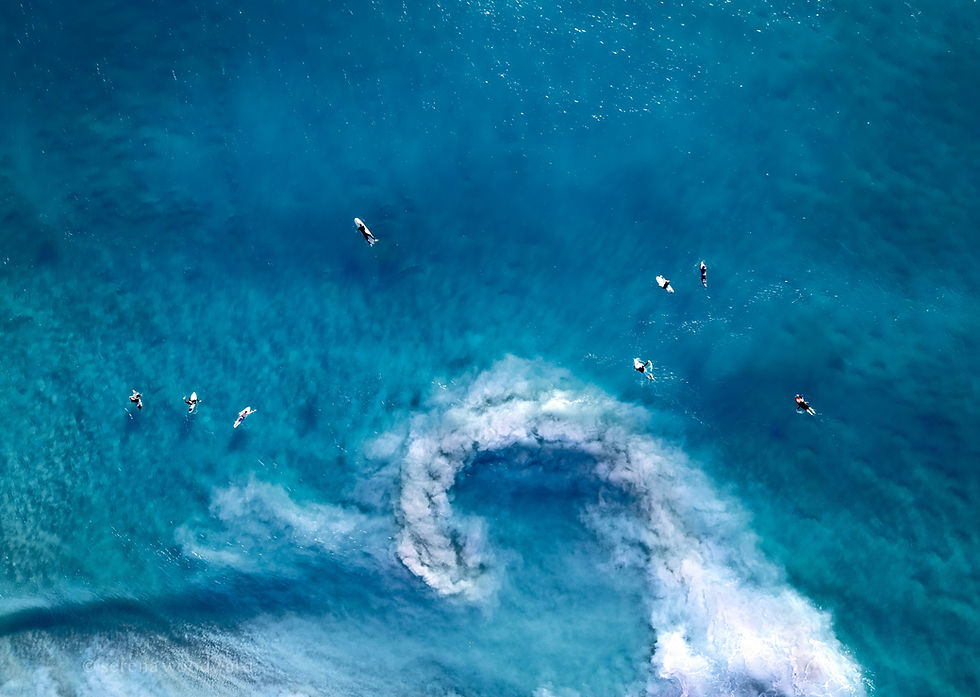
You're at the beach on a beautiful summer day. The waves are moderate. The weather is perfect. You wade into the water, swim out past the break, and suddenly something feels different. The water is pulling you. Not like a wave pushing you backward toward shore, but pulling you sideways and out toward the horizon. You try to swim back to shore, but it's like swimming on a treadmill turned up to maximum speed. No matter how hard you work, you're not getting closer to the beach. In fact, you're moving farther away.
You might be caught in a rip current. Most people panic at this point. They fight harder against the pull, exhausting themselves. Within minutes, they're too tired to continue fighting. Some drown. Others manage to catch the attention of a lifeguard and get rescued.
But here's what's important: If you understand what a rip current is and how to escape it, you can get out safely. It's not about being a strong swimmer. It's about understanding the physics of what's happening and responding intelligently. Every summer, rip currents are the leading cause of lifeguard rescues at beaches. An average of 71 Americans die from rip current drowning each year. Yet most of these deaths are preventable if people understand what they're facing and know the right escape technique.
What Is a Rip Current: The Basics
A rip current, sometimes incorrectly called a "rip tide," is a narrow, fast-moving channel of water that flows away from the shore toward the open ocean. Think of it like a river, but instead of flowing on land, it's flowing in the ocean, perpendicular to the beach. Rip currents typically form in the area between the shore and the line of breaking waves. They're usually less than 80 feet (about 25 meters) wide, but they can extend several hundred feet offshore before dissipating.
The most important thing to understand is that a rip current is not the same thing as a riptide, though the terms are sometimes used interchangeably. Strictly speaking, a riptide is a tidal current in a specific geographic feature like an inlet, bay, or lagoon. A rip current is the broader phenomenon of a narrow current flowing offshore that can occur at any beach. But for practical purposes, understanding rip currents is what matters for beach safety.
Speed and Strength
Typical rip currents move at 1 to 2 feet per second. That might not sound fast, but consider this: An Olympic swimmer sprinting at maximum speed can move about 6 feet per second. That means a typical rip current moves at only about one-third the speed of an Olympic sprinter. But here's the catch: Some rip currents have been measured at 8 feet per second. That's faster than any Olympic swimmer ever recorded. You literally cannot outswim the strongest rip currents. This is the key fact that makes them so dangerous. No matter how strong a swimmer you are, you cannot rely on swimming strength alone to escape a powerful rip current. You need to understand the physics and use the right technique.
Where They Form
Rip currents are most common in areas where the underwater geography has breaks or low spots. Sandbars are common features along beaches. These are underwater ridges of sand that run parallel to the shore. Waves break when they encounter these shallow areas. But where there's a break or gap in a sandbar, the water can pass through more easily. Rip currents also form near human-made structures. Jetties and piers extend into the ocean and disrupt normal wave patterns. Permanent rip currents often exist alongside these structures because the structures create breaks in the regular wave pattern. Other locations prone to rip currents include areas where the beach bottom drops off sharply or where different currents interact. Essentially, anywhere the underwater topography creates a gap or depression in the regular pattern, a rip current is likely to form.
How Rip Currents Form: The Physics
Understanding how rip currents form requires understanding wave energy and water movement. When waves travel from deep water toward shallow water, they slow down due to friction with the bottom. As they slow, they get taller. Eventually, they reach a point where they become too steep to maintain their shape, and they break. All this energy from breaking waves has to go somewhere.
The energy pushes water toward the shore. If you've ever felt a wave push you toward the beach, you've felt this effect. All this incoming water creates a buildup of water near the shore. The water level actually rises slightly along the beach. Scientists call this "wave setup." It's usually only about 10 percent of the breaking wave height, so it's hard to see with the naked eye, but it's real and measurable.
Now here's the key: All this water that's been pushed toward the shore has to get back out to the ocean somehow. It can't pile up forever. It will flow back out. Where does it go? It takes the path of least resistance. If the seafloor is relatively uniform, the water spreads out and flows back fairly evenly. But if there's a break in a sandbar or a low spot in the underwater topography, water will preferentially flow through that gap. Imagine a dam with water backed up behind it. If there's a hole in the dam, all the water flows through the hole rather than spreading out evenly. The same principle applies to rip currents.
The concentrated flow through the gap becomes narrow and fast. This concentrated, fast-moving flow is a rip current. As it moves offshore, it slows down and eventually dissipates beyond the line of breaking waves.
Identifying a Rip Current: The Visual Signs
One of the challenges with rip currents is that they can be hard to spot, especially in rough water. But there are visual clues that experienced beachgoers and lifeguards learn to recognize. One of the most distinctive signs is a narrow gap of darker, seemingly calmer water flanked by areas of breaking waves and whitewater. The contrast is important. On each side of the rip, waves are breaking normally. But in the rip itself, the water often appears smoother and darker. This is because the outflowing water interferes with incoming waves, preventing them from breaking in the normal pattern.
Another sign is a channel of churning or choppy water that's distinct from surrounding water. Sometimes the rip is rougher and more turbulent, not smoother. This happens when the rip current interacts with other wave patterns. A difference in water color is another clue. The rip current often carries sediment and sand away from the beach, creating a visible plume of discolored, muddy-looking water. From above (like from a lifeguard tower or a high vantage point), these discolored areas are quite visible.
Foam and seaweed being carried through the surf is another sign. Rips often collect floating debris and carry it offshore. If you notice a consistent line of foam or seaweed being pulled out through the surf, that's likely a rip current.
The challenge is that rips can change. A rip in one location might not be there an hour later. The underwater topography is dynamic, especially on sandy beaches where the bottom shifts constantly. New rips can form as conditions change.
The Biggest Mistake: Fighting the Current
Here's something crucial that saves lives: A rip current will not pull you underwater. This is a common misconception. A rip current is a surface current. It flows horizontally, pulling you away from shore. It won't drag you down into the depths. However, the biggest mistake people make when caught in a rip is exactly what seems most logical: they try to swim back to shore directly, fighting against the current.
Here's what happens. You get caught in a rip and feel the pull. Your instinct is to swim back to shore, the direction you came from. You fight hard against the current, using all your energy to move toward shore. But the rip is moving at 1-8 feet per second, and you're swimming at maybe 3-4 feet per second maximum. You're not making progress. In fact, you might be losing ground.
As you fight harder and harder, your muscles fatigue. After a few minutes of intense effort, you're exhausted. You've burned through your energy reserves. And you're no closer to shore than when you started. In fact, you might be farther out.
At this point, panic sets in. You're tired, you're not making progress, and you're feeling pulled away from safety. Panic causes you to fight even harder, which exhausts you further. Within minutes, you're too tired to continue swimming. That's when drowning becomes a real possibility.
The Correct Escape: Swim Parallel to Shore
The solution is counterintuitive but effective: Instead of swimming toward shore (against the rip), you swim parallel to the shore. Remember that a rip current is narrow, usually less than 80 feet wide. If you swim parallel to the shore (along the coastline, not toward or away from it), you'll swim out of the rip current within a few seconds to a minute. You're not fighting the current; you're swimming sideways out of it.
Once you've swum parallel to shore for 50-100 feet, you'll feel the rip's pull diminish. At that point, you can turn toward shore and swim back in. The current will no longer be pulling you offshore. The waves that are breaking on either side of the rip (but not in the rip itself) will actually help push you toward shore.
Some people have difficulty swimming parallel to shore while in a panic state. If that's the case, the next best option is to float or tread water. A rip current, once you're beyond the breaking waves, will actually start to recirculate back toward shore. If you float and wait, the rip will carry you back toward the waves, and then you can work with the breaking waves to make progress toward shore. This requires staying calm and trusting the process, which is hard when you're panicked.
The key message is: Relax, don't fight, and don't panic. Rip currents are dangerous because of panic and exhaustion, not because they're actually going to drown you directly.
Other Safety Strategies
Beyond understanding rip currents specifically, there are general beach safety practices that reduce your risk.
Swim Near Lifeguards
The best protection against rip currents is lifeguard supervision. Lifeguards are trained to spot rips, warn swimmers, and rescue people. Whenever possible, choose to swim at beaches with lifeguard protection.
Ask About Conditions
Before entering the water, ask the lifeguard about conditions. Are there rips present? Where have they been spotted? How rough is the water today? A lifeguard's local knowledge is invaluable.
Observe the Warning Flags
Most beaches with lifeguards fly colored flags indicating water conditions. Red flags usually mean moderate hazards (maybe rip currents present). Double red flags mean the water is closed to swimming. Flying a rip current flag specifically indicates that rips have been spotted. Pay attention to these signals.
Stay Away From Structures
Piers, jetties, and groins permanently alter wave patterns and often have strong permanent rip currents alongside them. Swimmers should stay at least 100 feet away from these structures.
Never Swim Alone
Swimming with a buddy is always safer. If you get into trouble, someone is there to alert lifeguards or call for help. If your buddy gets into trouble, you can provide assistance.
Build Your Skills
Good swimming skills matter. Being comfortable in water, understanding wave action, and practicing different swimming techniques all increase your confidence and safety in the ocean.
What Not to Do: Common Mistakes
Beyond fighting the current, there are other mistakes people make in rip current situations.
Panicking and thrashing around exhausts you quickly. Staying calm preserves energy and allows you to think clearly about escape options.
Swallowing water or getting seawater in your lungs when you're already tired is extremely dangerous. Keep your mouth closed when water is splashing around, and focus on staying afloat.
Some people try to dive deep, thinking they can escape the rip by going underwater. This doesn't work because the rip extends below the surface. Also, diving deep in a panic state is dangerous.
Giving up and accepting that you're going to be pulled out is also problematic. Even if a rip carries you several hundred yards offshore, you're still floating. You can still call for help. You can still paddle. Lifeguards and rescue boats can reach you.
The Broader Context: Ocean Safety
Rip currents are one of many ocean hazards. Understanding them is part of a broader water safety education. Waves, tides, undertow (which is different from a rip current), cold water, and currents all present hazards. Understanding the ocean environment before entering the water is crucial. Reading the conditions, recognizing signs of danger, and making smart decisions about when and where to swim can prevent most water-related accidents.
Additionally, understanding your own limitations matters. If you're not a strong swimmer, staying in shallow water near shore is a smart choice. If water conditions look rough, that's not the day to take a swim. If the waves are much bigger than usual, maybe that's a day to enjoy the beach without getting in the water.
Sources
"Rip Currents." National Oceanic and Atmospheric Administration (NOAA) Jetstream, 2026.
"Rip Current Safety." National Oceanic and Atmospheric Administration (NOAA) Jetstream, July 2023.
"How Do I Escape Rip Currents?" NOAA NESDIS (National Environmental Satellite, Data, and Information Service), 2026.
"Rip Currents: Currents." NOAA National Ocean Service Education, 2026.
"Rip Current Survival Guide." NOAA Ocean Today, 2026.
"Rip Current Science." National Weather Service, 2026.
"Rip Currents." Wikipedia, 2026.
"Riptides: A Maritime Phenomenon to Understand for a Leisurely Swim." Ocean Clock, 2025.
"Riptide vs. Rip Currents: Differences & How to Stay Safe." SERVPRO, November 17, 2025.
"Water Safety at the Beach." American Red Cross, 2025.
"Rip Current Education and Safety." United States Lifesaving Association, 2025.
"Ocean Hazards and Beach Safety." National Park Service, 2026.


Comments