%20(2).png)
Is There a Tech Fix for Climate Change?
Imagine if scientists could build giant machines to suck carbon dioxide right out of the air, or if they could spray tiny particles into the sky to reflect sunlight away from Earth like a massive air conditioner for the planet. It sounds like science fiction, but these ideas are real technologies that scientists are studying today. They're called "geoengineering" – which means deliberately changing Earth's climate system to fight global warming.
But is geoengineering our ticket out of the climate crisis, or could it make things worse? Let's explore this fascinating and controversial topic.
What Is Geoengineering?
Geoengineering is like giving Earth a helping hand to cool down. Scientists have come up with two main ways to do this:
Taking carbon dioxide out of the air (called Carbon Dioxide Removal or CDR)
Blocking some sunlight from reaching Earth (called Solar Radiation Management or SRM)
Think of it this way: if your room is too hot, you could either turn down the heater (removing CO2) or close the blinds (blocking sunlight). Both approaches could help cool things down, but they work very differently.
Method 1: Sucking Carbon Out of the Air
Direct Air Capture
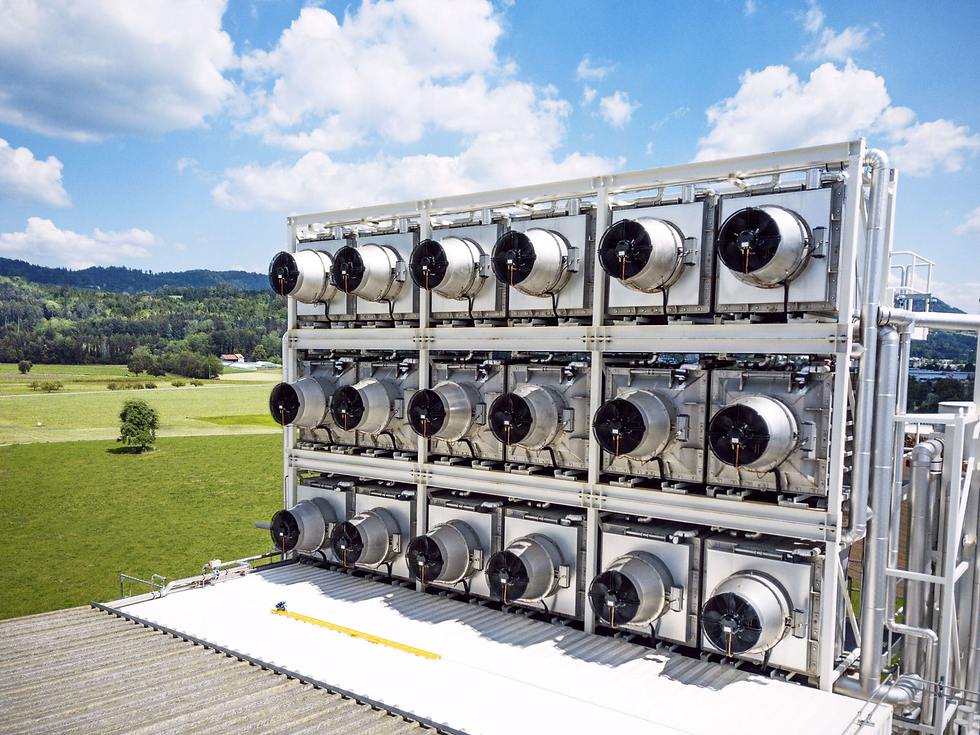
The most straightforward approach is building machines that work like giant vacuum cleaners for carbon dioxide. Three DAC projects are currently under construction, with the largest two expected to come online in 2024 in Iceland (36 kt CO2/year) and in 2025 in the United States (500 kt CO2/year). These machines use fans to pull in air, then use chemicals to grab the CO2 and store it underground or turn it into useful products.
The good news? This directly tackles the root problem by removing the greenhouse gases that are warming our planet. The challenging news? It's really expensive and would need to be done on a massive scale. Around 7 to 9 billion tons of CO2 per year will need to be removed by mid-century from the atmosphere if the world is to meet the 1.5°C Paris Agreement target.
Enhanced Weathering
Nature already has a way to remove CO2 from the air – rocks! When certain rocks are exposed to rain and air, they naturally absorb carbon dioxide over thousands of years. Enhanced weathering is a method of removing carbon dioxide from the atmosphere through acceleration of naturally occurring rock mineralization processes. Scientists want to speed this up by crushing rocks into powder and spreading them on farmland, where they can absorb CO2 much faster.
The 2024 State of Carbon Dioxide Removal report estimates that about 7 billion to 9 billion metric tons of CO2 must be removed from the atmosphere annually if the 1.5°C (2.7°F) Paris agreement target is to be met. Currently, we're nowhere near that goal.
Method 2: Creating Earth's Sunglasses
Solar Radiation Management
This approach is like giving Earth a pair of sunglasses. Solar Radiation Modification (SRM) refers to deliberate, large-scale actions intended to decrease global average surface temperatures by increasing the reflection of sunlight away from the Earth. The most talked-about method involves spraying tiny particles into the upper atmosphere to reflect sunlight back to space, similar to what happens naturally when volcanoes erupt.
Some scientists are even thinking bigger. Some scientists are researching the possibility of sending a giant sunshade to a point between Earth and the sun to block solar radiation. While this sounds like something from a superhero movie, researchers are seriously studying whether space-based solutions could work.
The Promise and the Problems
Climate models have consistently shown that solar geoengineering, when used in moderation and combined with emissions cuts, has the potential to reduce climate changes around the globe. The appealing part is that it could work relatively quickly and cheaply compared to other solutions.
But there's a catch – actually, several big catches. Unlike removing CO2, blocking sunlight doesn't solve ocean acidification (when oceans become more acidic due to absorbing CO2, which harms sea life). It could also change weather patterns in unpredictable ways, potentially causing droughts in some places and floods in others.
The Controversy: Why Some People Are Worried
Not everyone thinks geoengineering is a good idea. Over 16 states have introduced bills to ban solar geoengineering; a Tennessee ban on the technology passed into law in 2024. Critics worry about several issues:
The "Band-Aid" Problem: Some people fear that if we think geoengineering can save us, we might not work as hard to reduce pollution and switch to clean energy. It's like taking painkillers for a broken leg instead of getting it properly fixed.
Unknown Risks: We don't fully understand what might go wrong. What if changing one part of Earth's climate system accidentally messes up another part?
Who's in Charge?: If one country decides to start geoengineering, it affects the whole world. Who gets to make that decision? What if countries disagree?
The "Termination Problem": With solar radiation management, if we start blocking sunlight but then suddenly stop, temperatures could shoot up very quickly – faster than plants and animals could adapt.
What Do Scientists Think?
The scientific community is divided but generally cautious. Most climate scientists agree that we still need to drastically cut our greenhouse gas emissions. The authors stress that reducing emissions is the primary way to achieve climate goals. Geoengineering might help, but it shouldn't replace the hard work of switching to clean energy and reducing pollution.
However, research is moving forward. In late 2024, the Advanced Research and Invention Agency, a British funding agency, announced that research funds totaling 57 million pounds (about $75 million USD) will be made available to support projects which explore "Climate Cooling". Scientists want to understand these technologies better before we might need them.
The Bottom Line
Could we engineer our way out of climate change? Maybe – but it's complicated. Carbon dioxide removal technologies are promising because they address the root cause of climate change, but they're expensive and need to be scaled up dramatically. Solar radiation management could work faster and cheaper, but it comes with serious risks and doesn't solve all climate problems.
Most experts see geoengineering as a potential backup plan or supplement to – not a replacement for – cutting emissions and switching to renewable energy. It's like having a fire extinguisher in your kitchen: you hope you never need it, but it's good to have one just in case.
The real solution to climate change likely involves doing everything we can: reducing emissions, developing clean energy, protecting forests, and yes, maybe using some carefully tested geoengineering techniques. The key is making sure we understand the risks and benefits before we commit to any large-scale climate intervention.
As we face the growing challenges of climate change, geoengineering remains one of the most debated topics in science. Whether these technologies become humanity's climate lifeline or create new problems will depend on continued research, careful testing, and thoughtful decision-making by people around the world.
Sources
Columbia Climate School. "Solar Geoengineering To Cool the Planet: Is It Worth the Risks?" State of the Planet, April 25, 2024. https://news.climate.columbia.edu/2024/04/24/solar-geoengineering-to-cool-the-planet-is-it-worth-the-risks/
Harvard Solar Geoengineering Research Program. "The Harvard Solar Geoengineering Research Program." The Salata Institute, May 20, 2025. https://salatainstitute.harvard.edu/sgrp/
Science News. "Solar geoengineering moves into the spotlight as climate concerns grow," April 8, 2025. https://www.sciencenews.org/article/solar-geoengineering-climate-concerns
International Energy Agency. "Direct Air Capture - Energy System." https://www.iea.org/energy-system/carbon-capture-utilisation-and-storage/direct-air-capture
UK Government. "Direct Air Capture and Greenhouse Gas Removal Innovation Programme: Phase 1 projects," November 26, 2024. https://www.gov.uk/government/publications/direct-air-capture-and-greenhouse-gas-removal-innovation-programme-selected-projects/
NOAA Climate.gov. "Solar radiation modification: NOAA State of the Science factsheet," October 3, 2024. https://www.climate.gov/news-features/understanding-climate/solar-radiation-modification-noaa-state-science-factsheet
International Institute for Applied Systems Analysis. "The 2024 State of CDR Report: Scaling up CO2 removal to meet Paris Targets," 2024. https://iiasa.ac.at/news/jun-2024/2024-state-of-cdr-report-scaling-up-co2-removal-to-meet-paris-targets
Mongabay. "Calls for caution as enhanced rock weathering shows carbon capture promise," November 5, 2024. https://news.mongabay.com/2024/10/calls-for-caution-as-enhanced-rock-weathering-shows-carbon-capture-promise/
Wikipedia. "Solar radiation modification," Updated 2 weeks ago. https://en.wikipedia.org/wiki/Solar_radiation_modification


Comments