%20(2).png)
Decoding AI: From Neural Networks to Global Impact
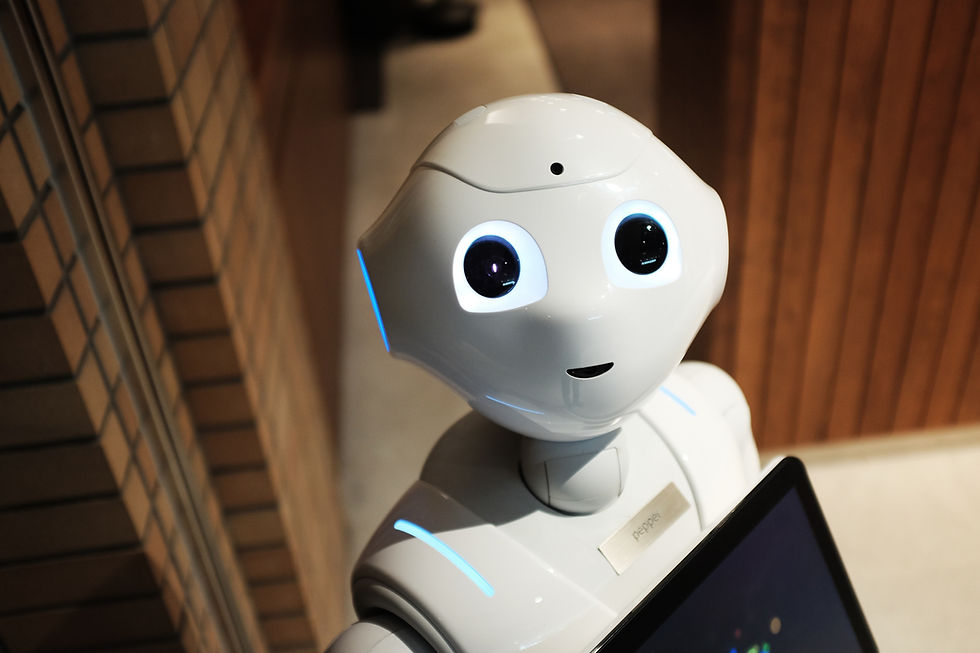
When you ask Siri a question, get movie recommendations on Netflix, or see targeted ads on social media, you're experiencing artificial intelligence in action. But AI is far more than these everyday conveniences. It's a technology that's quietly revolutionizing everything from medicine to transportation and education to entertainment. Like electricity or the internet before it, artificial intelligence isn't just another gadget – it's a fundamental shift in how we solve problems, make decisions, and understand our world.
What Exactly Is Artificial Intelligence?
Artificial intelligence, at its core, is the attempt to create machines that can think, learn, and make decisions like humans. But defining AI more precisely is surprisingly tricky, partly because it encompasses so many different approaches and technologies, and partly because our understanding of human intelligence itself is still evolving.
The simplest way to think about AI is as computer systems that can perform tasks typically requiring human intelligence. These tasks include recognizing speech, identifying objects in images, making predictions, solving problems, and even creating art or writing stories. What makes these systems "intelligent" isn't that they think like humans, but that they can achieve similar results through different methods.
Modern AI systems work by processing enormous amounts of data to identify patterns and make predictions. Think of it like this: if you showed a human child thousands of photos of cats and dogs, they would eventually learn to tell them apart. AI systems do something similar, but they can analyze millions of photos in hours rather than years, and they can spot patterns that might be invisible to human eyes.
There are several types of AI, each with different capabilities. Narrow AI, which is what we have today, excels at specific tasks but can't transfer that knowledge to other areas. A chess-playing AI might be unbeatable at chess but wouldn't know how to play checkers without being specifically trained. General AI, which doesn't exist yet, would be able to learn and apply knowledge across many different domains, much like humans do.
The Building Blocks: How AI Actually Works
To understand AI, it helps to know about its fundamental building blocks. Most modern AI systems are based on artificial neural networks, which are loosely inspired by how our brains work.
Neural Networks: Digital Brain Cells
Just as your brain contains billions of interconnected neurons, artificial neural networks consist of layers of artificial neurons (really just mathematical functions) connected to each other. When information enters the network, it flows through these layers, with each layer processing and transforming the data before passing it to the next level.
The magic happens through training. Initially, these networks make random, terrible guesses. But by showing them millions of examples and adjusting the connections between neurons based on right and wrong answers, they gradually learn to make better predictions. It's like having a student who gets better at math problems not by memorizing formulas, but by doing thousands of practice problems and learning from mistakes.
Machine Learning: Teaching Computers to Learn
Machine learning is the broader category that encompasses most modern AI techniques. Instead of programming computers with explicit rules for every situation, machine learning allows computers to discover patterns and rules on their own from data. There are several types of machine learning. Supervised learning uses labeled examples to teach the system – like showing it thousands of photos labeled "cat" or "dog." Unsupervised learning finds hidden patterns in data without labels – like analyzing customer behavior to discover different shopping patterns. Reinforcement learning teaches systems through trial and error, rewarding good decisions and penalizing bad ones, similar to how you might train a pet.
Deep Learning: The Current Revolution
Deep learning, the technology behind many recent AI breakthroughs, uses neural networks with many layers (hence "deep"). These deep networks can automatically discover complex patterns and features in data that would be impossible for humans to identify manually.
When a deep learning system recognizes your face in a photo, it's not looking for eyes, nose, and mouth the way a human might. Instead, the first layers might detect edges and shapes, middle layers combine these into more complex features, and final layers put everything together to identify faces. The system learned to do all of this on its own, just from seeing millions of examples.
The AI Revolution: Where It All Began
The story of AI begins much earlier than most people realize, rooted in humanity's age-old dream of creating artificial beings that could think and act like humans. But the scientific foundation was laid in 1943 when Warren McCulloch and Walter Pitts published their groundbreaking paper on artificial neural networks, providing the first mathematical model of how brain-like computation might work.
The term "artificial intelligence" was coined in 1956 at a conference at Dartmouth College, where researchers optimistically predicted that machines would soon achieve human-level intelligence. The early decades saw impressive achievements – programs that could play checkers, prove mathematical theorems, and engage in simple conversations.
However, AI development has been characterized by cycles of great enthusiasm followed by disappointment, known as "AI winters." In the 1970s and 1980s, when promised breakthroughs failed to materialize and funding dried up, many researchers moved on to other fields. The limitations of early AI approaches became apparent: they worked well in controlled environments but struggled with the messy complexity of the real world.
The renaissance began in the 1990s and 2000s, driven by three crucial factors: vastly more powerful computers, the availability of massive datasets thanks to the internet, and algorithmic breakthroughs in machine learning. Suddenly, AI systems could tackle problems that had been unsolvable for decades.
The Good: AI's Positive Impact on Society
Artificial intelligence is already transforming our world in countless positive ways, often in areas where human capabilities are limited or where tasks are too dangerous, repetitive, or complex for people to handle effectively.
Healthcare: Saving Lives Through Smart Analysis
Perhaps nowhere is AI's positive impact more dramatic than in healthcare. AI systems can now analyze medical images with accuracy that matches or exceeds human radiologists. They can spot early signs of cancer in mammograms, identify diabetic eye disease from retinal photos, and detect skin cancer from smartphone pictures.
AI is also accelerating drug discovery, a process that traditionally takes 10-15 years and costs billions of dollars. By analyzing molecular structures and predicting how different compounds might interact with diseases, AI can identify promising drug candidates in months rather than years. During the COVID-19 pandemic, AI helped researchers understand the virus's structure and identify potential treatments much faster than would have been possible otherwise.
In hospitals, AI systems monitor patients continuously, alerting doctors to subtle changes that might indicate developing complications. They help predict which patients are at risk of readmission, allowing hospitals to provide better follow-up care. AI is even being used to optimize surgery, helping surgeons plan procedures and providing real-time guidance during operations.
Transportation: Towards Safer Roads
Self-driving cars represent one of AI's most visible applications, with the potential to dramatically reduce traffic accidents, most of which are caused by human error. Current autonomous vehicles use multiple AI systems working together – computer vision to interpret visual information, sensor fusion to combine data from cameras, radar, and lidar, and decision-making algorithms to navigate safely.
Even before fully autonomous vehicles become widespread, AI is already making transportation safer. Advanced driver assistance systems can automatically brake to prevent collisions, help drivers stay in their lanes, and adapt cruise control to traffic conditions. In aviation, AI helps optimize flight paths to reduce fuel consumption and assists air traffic controllers in managing increasingly busy skies.
Education: Personalized Learning for Everyone
AI is revolutionizing education by making personalized learning possible at scale. Adaptive learning systems can adjust to each student's pace and learning style, providing additional help where needed and advancing more quickly through material they've mastered. This individualized approach can help close achievement gaps and ensure that no student is left behind.
AI tutoring systems are available 24/7, providing patient, unlimited practice and feedback. They can identify common misconceptions and adjust their teaching strategies accordingly. Language learning apps use AI to provide pronunciation feedback, while AI writing assistants help students improve their communication skills.
Environmental Protection: AI for the Planet
Artificial intelligence is becoming a powerful tool in the fight against climate change and environmental degradation. Smart grid systems use AI to optimize energy distribution, reducing waste and integrating renewable energy sources more effectively. AI helps predict energy demand, allowing utilities to adjust production and reduce reliance on polluting backup power plants.
In agriculture, AI-powered precision farming uses satellite imagery, sensors, and weather data to optimize crop yields while minimizing water usage and pesticide application. AI can detect crop diseases early, predict optimal harvesting times, and even identify weeds for targeted removal, reducing the need for herbicides.
Climate scientists use AI to analyze vast amounts of environmental data, improving weather forecasts and climate models. AI systems help monitor deforestation, track endangered species, and optimize conservation efforts by identifying the most effective strategies for protecting biodiversity.
Scientific Discovery: Accelerating Human Knowledge
AI is becoming an invaluable research assistant, helping scientists process and analyze data at unprecedented scales. In astronomy, AI systems scan through telescope data to identify new planets, stars, and cosmic phenomena that might take human researchers years to find. In physics, AI has helped solve complex problems like predicting protein structures, a breakthrough that could accelerate the development of new medicines.
AI is also democratizing scientific research by making powerful analysis tools available to researchers who might not have access to large teams of data analysts. It's helping archaeologists analyze satellite imagery to identify potential dig sites, assisting historians in digitizing and analyzing historical documents, and enabling psychologists to study human behavior patterns at scales never before possible.
The Challenges: AI's Dark Side and Growing Concerns
While AI's potential benefits are enormous, the technology also presents significant challenges and risks that society is still learning to navigate. Understanding these concerns is crucial for developing AI responsibly.
Job Displacement: The Automation Dilemma
One of the most immediate concerns about AI is its potential impact on employment. By 2025, AI might eliminate 85 million jobs but create 97 million new ones, but the transition period could be challenging for many workers.
AI is particularly good at automating routine, predictable tasks, which means jobs involving data entry, basic analysis, customer service, and even some creative tasks are at risk. However, history suggests that technological advances typically create new types of jobs even as they eliminate others. The challenge is ensuring that workers have opportunities to develop new skills and transition to emerging roles.
The concern isn't just about the number of jobs, but about the types of jobs being created versus those being eliminated. If AI primarily replaces middle-skill jobs while creating demand for high-skill technical roles and low-skill service jobs, it could exacerbate economic inequality and reduce opportunities for social mobility.
Privacy and Surveillance: The Watchers and the Watched
AI systems require enormous amounts of data to function effectively, raising serious concerns about privacy and surveillance. Facial recognition systems can track people's movements through public spaces, while AI analysis of social media posts, purchasing patterns, and online behavior can reveal intimate details about individuals' lives.
The combination of AI and big data enables surveillance at a scale and sophistication that would have been impossible just decades ago. Governments and corporations can potentially monitor citizens and customers in ways that feel invasive and controlling. The challenge is balancing the benefits of AI-powered services with fundamental rights to privacy and anonymity.
Data breaches become even more concerning when AI is involved, as hackers can potentially access not just raw information but also AI-generated insights and predictions about individuals. The more AI systems learn about us, the more valuable and dangerous that information becomes if it falls into the wrong hands.
Bias and Fairness: When Machines Inherit Human Prejudices
AI systems learn from data created by humans, which means they often inherit and amplify human biases. If historical hiring data shows that a company mostly hired men for technical roles, an AI system might learn to prefer male candidates, perpetuating discrimination. If crime prediction algorithms are trained on biased arrest data, they might unfairly target certain communities.
These biases can be subtle and difficult to detect, making them particularly dangerous. An AI system might make decisions that seem objective and data-driven but actually reflect and reinforce societal inequalities. The problem is compounded by the fact that many AI systems are "black boxes" – even their creators can't fully explain how they make decisions.
Addressing bias in AI requires diverse teams, careful data selection, ongoing monitoring, and sometimes accepting that perfect fairness might be impossible. It's not just a technical challenge but a fundamental question about what kind of society we want AI to help create.
Security and Misuse: When AI Goes Wrong
As AI becomes more powerful, the potential for misuse grows. Deepfakes can create convincing fake videos of public figures, potentially spreading misinformation or damaging reputations. AI-powered cyberattacks can adapt and evolve faster than traditional security measures can respond.
There are also concerns about AI being used for autonomous weapons systems, raising ethical questions about machines making life-and-death decisions. Even civilian AI systems can pose risks if they malfunction or are hacked – imagine an AI controlling a power grid or transportation system being compromised.
The challenge is developing AI governance frameworks that can keep pace with rapidly evolving technology while avoiding regulations that might stifle beneficial innovations.
The Numbers Game: AI by the Statistics
To understand the scale of AI's impact, it's helpful to look at some concrete numbers that illustrate both the technology's rapid growth and its current limitations.
AI is forecast to add $15.7 trillion to the global economy by 2030, representing one of the largest economic transformations in human history. The global AI market reached $638.23 billion in 2024, and growth shows no signs of slowing. Adoption rates vary significantly across industries and regions. 63% of organizations intend to adopt AI globally within the next three years, but 71% of employees are concerned about adopting AI in 2024, showing the tension between business enthusiasm and worker anxiety.
The technology sector dominates AI development, with companies investing billions in research and development. However, one-third of employees already work with AI solutions, indicating that AI integration is happening faster than many realize. These statistics reveal both the enormous potential and the urgent need for thoughtful implementation of AI technologies. The numbers are impressive, but they also highlight the importance of managing this transition responsibly.
Looking Forward: Navigating the AI Future
The future of artificial intelligence is not predetermined. The choices we make today about how to develop, deploy, and regulate AI will shape whether this technology becomes humanity's greatest tool or its greatest challenge.
The Path to Artificial General Intelligence
Most experts agree that current AI systems, impressive as they are, represent only the beginning. The ultimate goal for many researchers is artificial general intelligence (AGI) – systems that can match or exceed human cognitive abilities across all domains. While predictions vary widely, some experts believe AGI could arrive within decades.
The development of AGI would represent a fundamental turning point in human history, comparable to the agricultural or industrial revolutions. Such systems could accelerate scientific discovery, solve complex global problems, and automate most human work. However, they would also raise profound questions about human purpose, economic structures, and the distribution of power in society.
Ethical AI: Building Technology That Serves Humanity
As AI becomes more powerful and pervasive, the importance of developing ethical AI frameworks grows. This includes ensuring AI systems are transparent, accountable, and aligned with human values. It means addressing bias, protecting privacy, and maintaining human agency in important decisions.
Many organizations are developing AI ethics guidelines, but translating principles into practice remains challenging. Questions about who should control AI development, how to ensure fair distribution of benefits, and how to prevent misuse don't have easy answers.
Education and Adaptation: Preparing for an AI World
Perhaps the most important factor in determining AI's impact will be how well society adapts to these changes. This requires updating education systems to teach both technical skills for working with AI and critical thinking skills for living in an AI-influenced world.
Workers will need opportunities for retraining and skill development as job requirements change. Citizens will need to understand AI well enough to make informed decisions about its use in their communities and countries.
Global Cooperation: AI as a Shared Challenge
AI development is happening globally, but its impacts will be felt everywhere. International cooperation will be essential for addressing challenges like AI safety, security, and equitable development. Just as we have global agreements on issues like climate change and nuclear weapons, we may need new frameworks for governing AI development.
The goal should be ensuring that AI's benefits are broadly shared while minimizing risks and negative consequences. This requires ongoing dialogue between technologists, policymakers, ethicists, and the public.
Writing Our AI Story
Artificial intelligence is not just another technology – it's a mirror that reflects our hopes, fears, and values as a species. The AI systems we build and deploy will embody our choices about what we value, how we want to solve problems, and what kind of future we want to create.
The story of AI is still being written, and we all have a role in shaping it. Whether AI becomes a tool that reduces inequality or increases it, that enhances human capabilities or replaces them, that solves global challenges or creates new ones, will depend on the decisions we make today and in the years to come.
The technology itself is neither good nor evil – it's a powerful tool whose impact will be determined by how we choose to develop and use it. By staying informed, asking critical questions, and participating in discussions about AI's role in society, we can help ensure that artificial intelligence serves humanity's best interests.
As we stand on the brink of what may be the most significant technological transformation in human history, we have both an opportunity and a responsibility. The opportunity is to harness AI's incredible potential to solve problems, reduce suffering, and expand human capabilities. The responsibility is to do so thoughtfully, ethically, and inclusively.
The future of AI is not something that will happen to us – it's something we're actively creating through our choices, policies, and priorities. By understanding both the promise and the perils of artificial intelligence, we can work together to write a story where this remarkable technology helps build a better world for everyone.
Sources and Further Reading
National University. "131 AI Statistics and Trends for (2024)." January 14, 2025. https://www.nu.edu/blog/ai-statistics-trends/
Semrush. "79 Artificial Intelligence Statistics for 2025 (Key AI Stats)." July 3, 2025. https://www.semrush.com/blog/artificial-intelligence-stats/
Synthesia. "154 Eye-Opening AI Statistics of 2024." April 12, 2025. https://www.synthesia.io/post/ai-statistics
IBM. "What is a Neural Network?" June 4, 2025. https://www.ibm.com/think/topics/neural-networks
IBM. "The History of Artificial Intelligence." June 18, 2025. https://www.ibm.com/think/topics/history-of-artificial-intelligence
MIT News. "Explained: Neural networks." April 14, 2017. https://news.mit.edu/2017/explained-neural-networks-deep-learning-0414
TechTarget. "The History of Artificial Intelligence: Complete AI Timeline." https://www.techtarget.com/searchenterpriseai/tip/The-history-of-artificial-intelligence-Complete-AI-timeline


Comments